Articles are prepositions used in English that precede nouns. Articles can be found in many Indo-European, Semitic and Polynesian languages but tend to be absent in Asian and East Caucasian tongues.
Articles provide the perfect way to educate your target audience on an industry or niche topic while simultaneously driving traffic back to your website or storefront.
Leaves
Egyptian Walking Onions (Allium x proliferum) propagate themselves via bulbils at their top stems, commonly referred to as bulbils or walking onions. Also referred to as tree onions, Welsh onions and walking onions, these perennial plants thrive across all USDA zones – taking on different names depending on where you grow them – seemingly “walking” throughout garden beds while propagating themselves along their journey. They’re easy to grow from seeds or single plants alike and tolerate frost and snow well!
When onion stalks become top-heavy, their top heavy stalks bend over and touch the ground where their bulbils rest – creating new plants which grow at an astonishing rate, with one plant “walking” 24 inches yearly to form new bulbs and produce six new onions each year! Due to this incredible process of self-replication, this fascinating vegetable makes an excellent addition for small gardens, containers on patios or balconies, or for gardeners looking to expand their patch with minimal effort.
Leaves, bulbs and bulbils of this hardy vegetable can be used as an excellent replacement for scallions or green onions in salads and soups. Pickled pickles provide milder taste and texture alternatives while chopped pieces can also be added to omelets, stews casseroles and baked potatoes for delicious breakfast or lunch dishes. Its unique growth habit and gorgeous foliage also make this onion an attractive feature in flower gardens and garden beds.
Roots
Egyptian Walking Onions (Allium x proliferum) are an intriguing and low-maintenance vegetable to grow, which are fun and entertaining to tend. As their name implies, these perennial onions “walk” by producing clusters of bulblets at their top stalks that eventually touch down on soil and form roots to establish new plants – making this perennial variety ideal for any garden despite limited space available.
At its “candlestick” stage, an Egyptian Walking Onion plant features a tall central stalk topped by clusters of bulblets resembling long green taper candles. Each bulblet is enclosed within a thin papery sack which eventually tears open to reveal mini green onion “snakes.” These “snakes” can then be eaten, used as garnish for dishes or replanted as new Egyptian Walking Onions in the ground.
If you plan to replant walking onions, the optimal time is in autumn. This allows them to produce additional bulblets for next spring’s planting and allows other deep-rooting veggies like potatoes, tomatoes and peppers time to establish themselves in their new homes. When possible, avoid planting walking onions near crops with high concentrations of juglone-tolerant crops like beans peas and cucumbers which attract natural pests of onions that could attract diseases that damage them directly.
Walking onions thrive in loose, fertile soil that drains well, with plenty of sunshine but can tolerate partial shade if necessary. To achieve healthy growth and ensure good nutrition for these perennial plants, adding organic matter and amending with balanced fertilizers are ideal, while mulching with straw or leaves helps retain moisture and suppress weeds at once.
Fruit
Egyptian walking onions (Allium fimbriata) are cool-weather perennials with an interesting growth habit that has earned them their common moniker: walking onions. Easy to grow, hardy enough for various conditions and low in maintenance requirements make these perennial plants ideal for gardeners who seek perennial crops with year-after-year returns.
Egyptian walking onions differ from most varieties in that they don’t produce seeds; rather they reproduce via bulblets instead. Each plant produces clusters of small bulbs shaped like green onions wrapped with papery skin on top of stems; as these mature, their stalks bend toward the ground while their bulblets touch each other and root themselves, producing new onions plants – giving these unique plants their distinctive appearance and earning them their unique moniker of “walking onions.”
Egyptian onion plants begin their lives producing modest-sized bulbs. But as they approach maturity, their growth transitions into “candlestick” growth; wherein a tall central stalk forms and top-set bulbs become heavier, its stalks bend and the bulbs drop to the ground where each will form new onion plants.
Walking onions should ideally be planted during fall planting season; however, spring planting can also be viable depending on soil conditions. When selecting and planting walking onion sets or bulblets be sure they have healthy bulbs with pointed ends facing upward. Use well-draining soil with plenty of sunlight exposure for best results.
Seeds
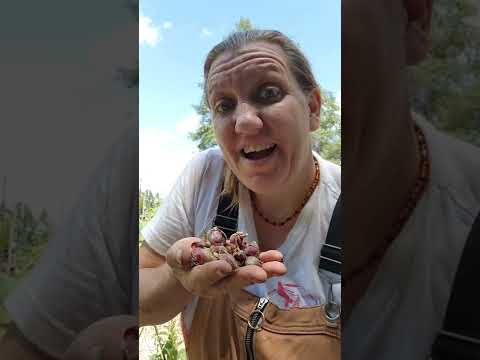
Every scape of an Egyptian Walking Onion plant produces tiny bulbs called “topsets.” These topsets act like mini Egyptian Walking Onions; when planted they produce new Egyptian Walking Onions plants.
If topsets are left to mature on their stalk, they will fall and root themselves wherever they land, much like chive seeds do. This creates the “walking onion,” an extremely low maintenance perennial that spreads itself with little work required from gardeners – it even thrives well in USDA Zones 3-10! These unique onions add flavorful spice to many different dishes while standing out from other onions thanks to its distinctive growth pattern which appears like they are “walking across” your garden!
Topsets may become dry and papery during storage, leading some people to assume that they are no longer viable. But this is just part of their natural maturation process–similar to how tulips, daffodils and grape hyacinths develop bulblets over time.
Fall planting season brings our box full of miniature topsets – each cluster containing 10-20 tiny white topsets – ready for planting. Simply break apart each cluster and plant each individual topset roughly 1-2″ below the soil surface – which will grow into full-sized Egyptian Walking Onions that you can harvest and replant later!