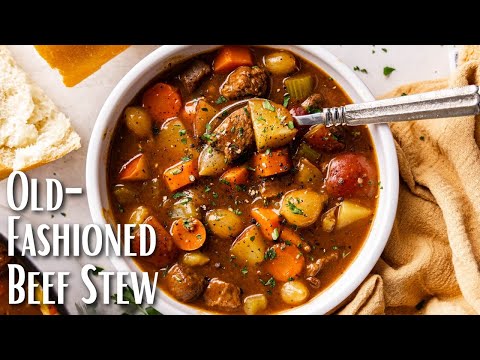
A good beef stew solves a lot of weeknight problems. It turns an affordable cut of beef into something spoon-tender. It wraps carrots, potatoes, and onions in a savory gravy that clings to everything without feeling heavy. And it holds well, so you can cook once and eat well for days. This version keeps the bones of the classic—seared beef, browned aromatics, tomato paste, a little wine or extra stock, and time. The result is a pot of stew with deep color, balanced seasoning, and vegetables that taste like themselves.
The method matters more than any single ingredient. Searing the beef until a dark crust forms builds the base. Browning tomato paste wakes up its sugars and adds body. Deglazing lifts all the good bits off the bottom of the pot so the gravy tastes layered instead of flat. A small amount of flour early on or a cornstarch slurry later gives you control over thickness without clouding the broth. If you respect those steps, you can swap vegetables, lean toward more herbs or fewer, and still get a stew that feels steady and reliable.
Time is your other tool. A gentle simmer breaks down tough connective tissue in chuck, turning it into something tender without shredding into strings. Rushing with high heat drives moisture out of the meat and makes it chewy. Keep the pot at a lazy bubble, cover it loosely, and let it go until the beef yields to a fork. Add root vegetables later, so they cook through but keep their shape. Finish with something bright—vinegar, lemon, or a handful of parsley—so the stew tastes alive, not muddy.
This is a home cook’s stew: straightforward, forgiving, and practical. You can make it on the stovetop in a Dutch oven, in a slow cooker, or in a pressure cooker. The stovetop version sets the standard for flavor and texture; the slow cooker trades some browning for convenience; the pressure cooker buys speed but still wants a few minutes of simmering at the end to marry the flavors. Leftovers improve overnight as the collagen sets and flavors mingle. The gravy thickens in the fridge; a splash of water or stock brings it back when you reheat.
What follows explains the “why” behind each step, offers timing and doneness cues, and gives substitutions that won’t compromise the result. Once you’ve made it once, the method will feel second nature.
What Makes an Old-Fashioned Beef Stew Taste Right?
Build flavor in layers
- Brown the beef well. Deep browning creates hundreds of flavorful compounds. It also seasons the pot for everything that follows. Work in batches so the cubes actually sear instead of steam.
- Brown the tomato paste. A minute or two in hot fat concentrates flavor and deepens color.
- Deglaze thoroughly. Stock or wine dissolves the browned bits stuck to the pan. Scrape the bottom clean—those bits become the backbone of the gravy.
Control texture on purpose
- Choose the right cut. Chuck roast has connective tissue that melts to gelatin; this gives the stew body without extra thickeners.
- Mind the simmer. A gentle simmer keeps the meat tender and the broth clear.
- Add vegetables in stages. Root vegetables need less time than beef. Add them after the meat has cooked for a while so they stay intact.
- Thicken carefully. A light flour dusting at the start or a cornstarch slurry at the end keeps the gravy glossy. You don’t need much.
Balance the seasoning
- Salt in stages. Season the beef, season the aromatics, and taste again at the end.
- Use a little acidity. A splash of vinegar or lemon at the finish brightens the stew and keeps it from tasting heavy.
- Herbs support, not dominate. Bay and thyme are classic. Parsley at the end freshens everything up.
Best Cuts, Substitutions, and Add-Ins
- Beef: Chuck roast is the standard. Bottom blade, shoulder clod, or boneless short ribs also work. Avoid very lean cuts; they dry out.
- Liquid: Low-sodium beef stock is reliable. Water plus a small amount of concentrated stock is fine. Dry red wine adds depth; if you skip wine, add a teaspoon of vinegar at the end.
- Vegetables: Carrots, onions, and potatoes are traditional. Parsnips, celery root, turnips, or rutabaga fit well. Frozen peas or pearl onions can be stirred in at the end for color and sweetness.
- Seasonings: A small pinch of allspice or paprika supports the base without taking over. Worcestershire contributes savory notes; soy sauce can stand in if needed.
Step-By-Step Technique Notes
Sear without crowding
Pat the beef dry and season it. Heat oil until shimmering and add beef in a single layer with space around each piece. Let it build a crust before turning. Browning takes time; two or three batches is normal.
Sweat, then brown aromatics
Reduce the heat slightly, add onions and celery with a pinch of salt, and cook until translucent. Stir in tomato paste and cook it until brick-red. Add garlic last so it doesn’t scorch.
Deglaze and scrape
Add wine or stock and scrape the pot bottom with a wooden spoon until smooth. Bring to a simmer to cook off raw alcohol if using wine.
Simmer low and slow
Add beef back to the pot with stock, herbs, and seasonings. Keep the simmer lazy; cover partially to limit evaporation but allow reduction.
Add vegetables at the right time
After the beef is mostly tender, add carrots and potatoes. They usually need 30–40 minutes to cook through without breaking down.
Adjust thickness and finish
If the stew is too thin, stir in a cornstarch slurry and simmer briefly until glossy. If it’s too thick, add a splash of stock or water. Finish with vinegar or lemon and a handful of chopped parsley.
Make-Ahead, Storage, and Reheating
- Make-ahead: Stew is better the next day. Cool uncovered until steam subsides, then cover and refrigerate.
- Storage: Refrigerate up to 4 days. Freeze up to 3 months in airtight containers, leaving headroom for expansion.
- Reheating: Rewarm gently on the stovetop over low heat, adding a splash of water or stock to loosen the gravy. Microwave in short bursts, stirring between bursts.
Troubleshooting
- Beef is tough: It needs more time at a gentle simmer. Keep going until it yields easily to a fork.
- Gravy is thin: Simmer uncovered to reduce, or whisk in a small cornstarch slurry and simmer 2–3 minutes.
- Gravy is too thick: Add stock or water a little at a time.
- Tastes flat: Add a pinch of salt and a splash of acid. Fresh herbs at the end help.
Variations That Stay True to the Spirit
- Mushroom addition: Brown sliced mushrooms after searing beef; add back with the vegetables for earthiness.
- Smoky note: A small amount of smoked paprika adds warmth without turning it into something else.
- Herb swap: Use rosemary sparingly, or a bay-thyme-parsley mix for a classic profile.
Recipe: Old-Fashioned Beef Stew
Yield, Time, and Nutrition
- Servings: 6 generous bowls
- Active prep: 35 minutes
- Simmer time: 2 to 2½ hours (stovetop method)
- Total time: 2½ to 3 hours
- Approximate nutrition (per serving): 520 kcal; Protein 36 g; Carbohydrates 34 g; Fat 25 g; Fiber 5 g; Sodium 720 mg. (Values are estimates and vary by ingredients.)
Required Equipment
- 5–7 qt (4.7–6.6 L) Dutch oven or heavy pot with lid
- Cutting board and sharp knife
- Wooden spoon or spatula for deglazing
- Measuring cups and spoons
- Small bowl for slurry (optional)
- Ladle
Ingredients (US & Metric)
For the beef and base
- 2½ lb beef chuck roast, cut into 1½-inch cubes (1.1 kg)
- 2 tsp kosher salt, divided (10 g)
- 1 tsp black pepper (2 g)
- 2 tbsp neutral oil (28 g)
- 1 large yellow onion, diced (about 2 cups / 300 g)
- 2 ribs celery, diced (about 1 cup / 120 g)
- 2 tbsp tomato paste (30 g)
- 3 cloves garlic, minced (3 medium / 9 g)
- ½ cup dry red wine (optional) (120 ml)
- 4 cups low-sodium beef stock (960 ml)
- 1 tbsp Worcestershire sauce (15 ml)
- 2 bay leaves
- 1 tsp dried thyme or 1 tbsp fresh (1 g dried / 3 g fresh)
- ½ tsp sweet paprika (1 g)
- Pinch ground allspice (optional, ~0.25 g)
Vegetables and finish
- 4 medium carrots, cut into 1-inch chunks (about 3 cups / 375 g)
- 1½ lb waxy or gold potatoes, 1½-inch chunks (680 g)
- 1 cup frozen peas or pearl onions, thawed (140 g)
- 1 tbsp cornstarch mixed with 1 tbsp cold water, if needed (8 g + 15 ml)
- 1–2 tsp red wine vinegar or lemon juice, to taste (5–10 ml)
- ¼ cup chopped fresh parsley (10 g)
Preparation Instructions (Stovetop, Dutch Oven)
- Season and sear the beef
Pat beef dry. Toss with 1 tsp (5 g) salt and pepper. Heat oil in the Dutch oven over medium-high until shimmering. Add half the beef in a single layer. Sear without moving until well browned on the first side, 3–4 minutes; turn and brown another 2–3 minutes. Transfer to a bowl. Repeat with remaining beef, adding a little more oil if the pot looks dry. - Build the aromatic base
Reduce heat to medium. Add onion and celery with the remaining 1 tsp (5 g) salt. Cook, scraping up brown bits, until onion is translucent and edges are golden, 6–8 minutes. Clear a space, add tomato paste, and cook, stirring, until the paste deepens to a brick-red color, about 1–2 minutes. Stir in garlic for 30 seconds. - Deglaze and load the pot
Pour in the wine (if using) and simmer, scraping the bottom, until mostly reduced, 2–3 minutes. Add stock, Worcestershire, bay leaves, thyme, paprika, and allspice. Return beef and accumulated juices to the pot. Bring just to a simmer. - Gentle simmer for tenderness
Reduce heat to low so the stew barely bubbles. Partially cover and simmer 60–75 minutes, stirring occasionally, until the beef is beginning to turn tender. - Add vegetables in stages
Stir in carrots and potatoes. Continue simmering, partially covered, until vegetables are just tender and beef is fork-tender, 35–45 minutes. Skim excess fat if needed. - Adjust thickness
If the stew looks thin, stir cornstarch and water together, then drizzle the slurry into the simmering stew while stirring. Simmer 2–3 minutes until glossy and lightly thickened. If too thick, loosen with a splash of stock or water. - Finish and serve
Fish out the bay leaves. Stir in peas or pearl onions and heat through, 2–3 minutes. Off the heat, add vinegar or lemon juice to brighten. Taste and adjust salt. Stir in parsley. Ladle into warm bowls.
Slow Cooker Method (Convenience Option)
- Brown for flavor: Sear seasoned beef in a skillet as in Step 1. Transfer to slow cooker.
- Aromatics: Brown onions, celery, and tomato paste in the same skillet; add garlic briefly. Deglaze with wine or 1 cup (240 ml) stock; scrape up browned bits and pour everything into the slow cooker.
- Cook low and long: Add remaining stock, Worcestershire, bay, thyme, paprika, and allspice. Cook Low 7–8 hours or High 4–5 hours, adding carrots and potatoes for the final 2–3 hours so they don’t overcook.
- Finish: Stir in peas or pearl onions. Thicken with a quick slurry if needed. Brighten with vinegar or lemon and finish with parsley.
Note: Slow cookers vary. If vegetables tend to overcook, cut them larger or shorten their time in the pot.
Pressure Cooker Method (Faster Option)
- Sear in batches: Use sauté mode to brown the beef well. Remove to a bowl.
- Aromatics and deglaze: Sauté onion and celery with salt, brown the tomato paste, stir in garlic, then deglaze with wine or stock, scraping completely.
- Pressure cook the beef: Return beef with stock, Worcestershire, bay, thyme, paprika, and allspice. Lock lid and cook 35 minutes at High Pressure; natural release 10 minutes, then quick release remaining pressure.
- Add vegetables: Stir in carrots and potatoes. Cook 5–7 minutes at High Pressure; quick release.
- Finish: Add peas or pearl onions on sauté. Thicken if needed; brighten with vinegar or lemon; add parsley.
Ingredient Notes and Practical Swaps
- Stock strength: If your stock is very mild, dissolve 1–2 tsp (6–12 g) beef base in hot water and add gradually, tasting as you go.
- Wine substitution: If skipping wine, use extra stock and finish with 2 tsp (10 ml) vinegar or lemon.
- Potatoes: Waxy or gold potatoes hold shape better than russets. If using russets, cut larger and add later in the process.
- Vegetable add-ins: Parsnips, turnips, or celery root bring sweetness and complexity. Keep total root veg to roughly 4–5 cups (550–700 g) so the stew doesn’t crowd.
- Heat level: This stew isn’t spicy. If you want subtle warmth, add a pinch of red pepper flakes with the paprika.
Texture and Thickness Guide
- Classic body without pastiness: The gelatin released from chuck gives natural body. Use only as much thickener as you need for light gravy.
- Flour vs. cornstarch: Dredging the beef lightly in flour before searing will thicken the stew gradually; a slurry at the end gives precise control. Don’t use both heavily.
- Reducing vs. thickening: If flavors taste dilute, reduce the liquid uncovered for 10–15 minutes before adding a slurry. Reducing concentrates flavor and often gives you the body you want.
Finishing and Serving Tips
- Acid at the end: A small splash of red wine vinegar or lemon wakes up the whole pot. Add a little, taste, and add more only if needed.
- Herbs: Fresh parsley folded in at the end adds clean, green notes without overshadowing the stew.
- Bread or grains: Serve with crusty bread for dipping, or spoon over buttered noodles or mashed potatoes if you want a heartier plate.
- Resting: If time allows, let the finished stew sit off heat for 10–15 minutes before serving so the flavors settle.
Safe Handling and Cooling
- Cooling: Spread the hot stew into shallow containers so it cools quickly, then refrigerate.
- Reheat thoroughly: Bring to a gentle simmer before serving again. Add liquid if the gravy thickened in the fridge.
Quick Reference Timing (Stovetop)
- Brown beef: 10–15 minutes total
- Aromatics and tomato paste: 7–10 minutes
- Simmer beef before veg: 60–75 minutes
- Simmer with veg: 35–45 minutes
- Finish and adjust: 5–10 minutes
Summary of the Method in Plain Terms
Brown the beef well. Brown the tomato paste. Deglaze and add stock and seasonings. Simmer gently until the beef relaxes. Add carrots and potatoes and cook until tender. Adjust thickness, brighten with a splash of acid, and finish with parsley. Serve hot. Save the rest for tomorrow—stew rewards patience.